A Tenno's Tale: Embracing the Focus 3.0 Overhaul
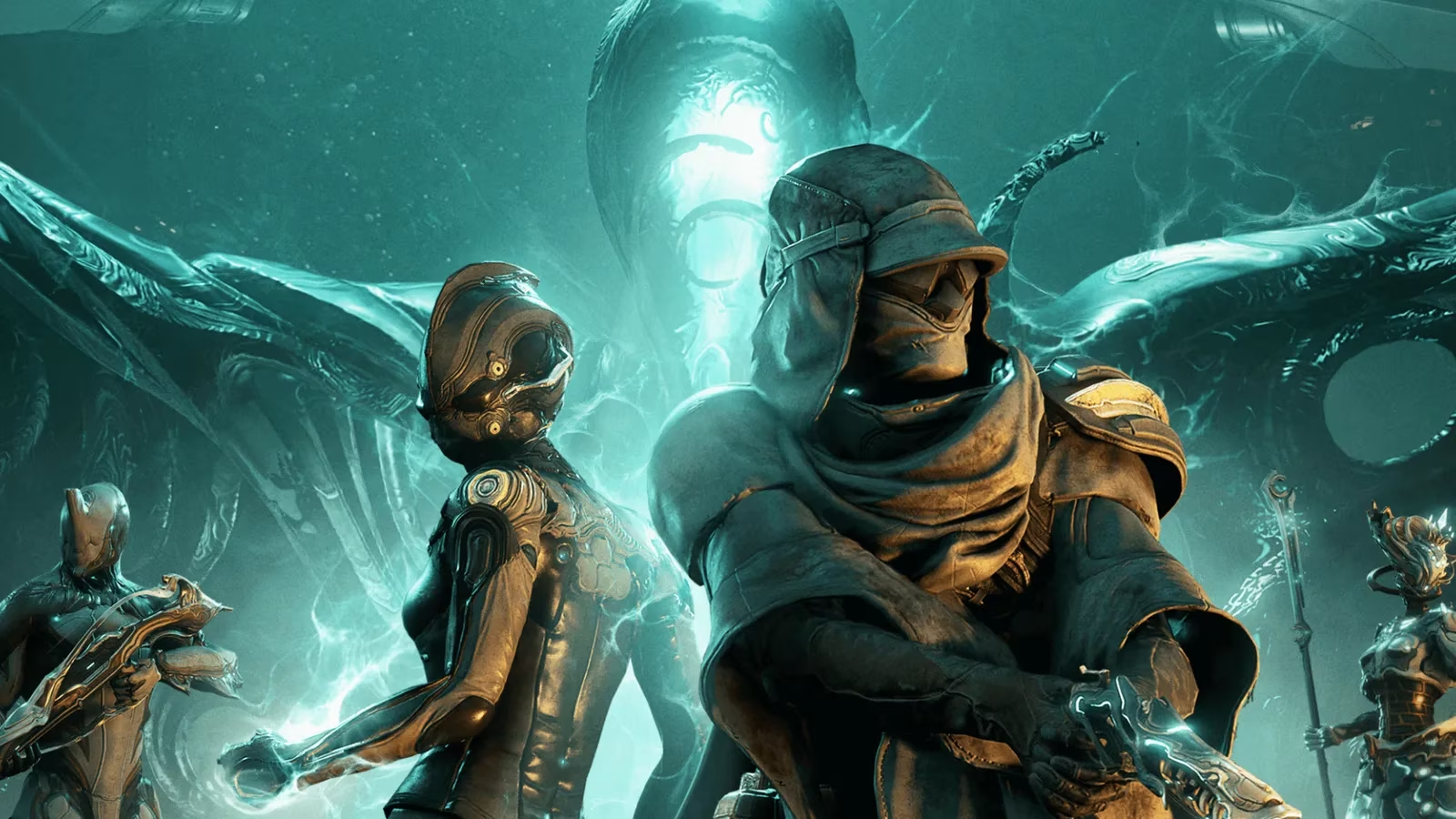
It was the kind of morning aboard the Orbiter when even Ordis seemed to be holding his breath. The Angels of the Zariman update had descended upon the Origin System, and with it, a tidal wave of change crashed into one of the game’s most ancient systems: the Focus schools. For Tenno everywhere, the five quiet disciplines that had sat like dusty tomes on a shelf were suddenly rewritten, their pages crackling with new energy. And right at the heart of it, the Operator themselves—their very way of moving and fighting—was about to feel completely different.
You see, for years, a Tenno’s second self had danced through the void with a jerky, instant teleport called Void Dash. That old friend was gone. In its place came Void Sling, a more deliberate, almost theatrical way of traversing the inky blackness. Now, pressing the jump key while cloaked created a shimmering afterimage, a ghost of intention that you could steer around corners or stretch across staggering distances before snapping to it. The old speed demons grumbled. “Void Sling? Seriously? They’re nerfing our zoomies.” But then, after a few missions, something clicked. The ability to curve a teleport behind cover, to land exactly where you meant to without the head-bonking previous dash, felt… intentional. Controlled. Like learning to bullet-jump after the old days of coptering. You’d give up a sliver of raw speed, sure, but you gained the grace of a void-walker who knew precisely where every step would land.
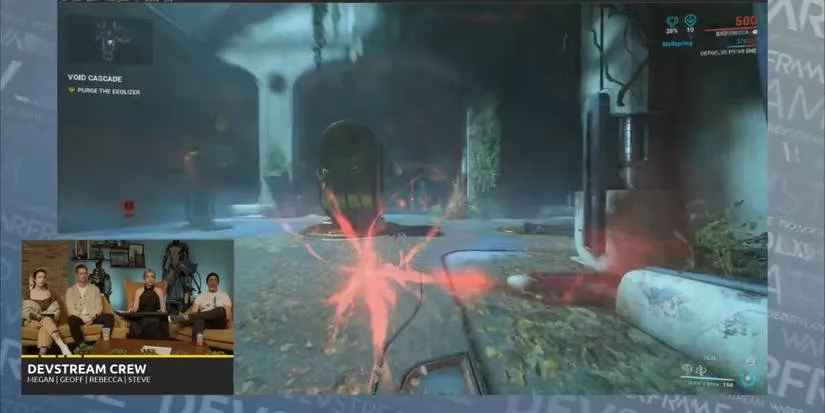
This wasn’t just a mobility patch, though. The whole Focus system had been turned on its head. Void Blast, that awkward melee swing, was simply… erased. Now, meleeing as your Operator snapped you instantly into your Warframe at your current location, a change so fluid it made you wonder how you ever tolerated the old delay. More importantly, Operators gained genuine abilities—two per school—that you could trigger at any moment, shedding the passive-only identity that had clung to them for so long. The Focus Pool, that confusing resource sink, melted away entirely, refunding players in Radiant Eidolon Shards like an apology for past complexity. And the technical hiccups? Operators became client-side, meaning the dreaded host-not-me lag that made transferring into your Operator a gamble was finally laid to rest. A collective sigh of relief echoed across every relay.
So, the schools themselves. They had personalities, now. Madurai, the fiery phoenix school, stopped being just an Eidolon hunter’s one-trick pony. Its signature Void Strike morphed from a charged-up limited-shot multiplier into a flat 1,000% damage buff lasting eight whole seconds, on a 40-second cooldown. “Eight seconds of pure madness,” a veteran whispered in a dojo while melting a Kuva Lich. That same buff granted ammo efficiency, and the new Power Transfer passive made swapping between Operator and Warframe feel like a tag-team ultimate, pumping amp critical damage and casting speed. Eidolon hunting would adapt—perhaps a squad rotating their strikes—but for the everyday Tenno, Madurai had become a versatile sun, not just a one-off flare.
Naramon, the mind’s edge, took a turn into crowd control and finishers. Imagine a miniature Rhino Stomp in your pocket, an ability called Void Levitation that lifted enemies and made them vulnerable to amplified damage. Then, the real poetry: executing a finisher as your Operator would transfer you into your Warframe with a 50% melee critical chance boost for 40 seconds. A silent assassin’s waltz. Power Spike still kept your combo count from vanishing, but now you could invest that combo into an amp damage surge via No Quarter, turning your little void child into a terrifying glass cannon with a fully stacked melee counter.
Unairu, the mountain school, became an immovable fortress. Its new passive Poise was basically Primed Sure Footed baked into the school—complete immunity to knockdowns, staggers, and slows for 40 seconds after transferring. Stone Skin added armor. But the real magic was Unairu Wisp, now triggered by an explosive Caustic Charge that stripped 75% of enemy armor. Those wisps no longer hovered awkwardly on the ground; they actively sought out allies within affinity range, granting a double damage boost to Operators. And a second ability, Magnetic Flare, could completely disable enemy shields in an 8-meter field, making Corpus steel path runs feel like a casual walk. Unairu had transformed from the tanky-but-boring kid into a support fortress that laughed in the face of stagger.
Vazarin, the watery healer, tried something bold: a group-wide Iron Skin. Guardian Shell created a protective barrier on the Operator and all allies in range, invulnerable at first to absorb incoming damage into its health. When it shattered, Warframe shields recharged in a blink. Its Void Snare ability spun up vortex traps, and slinging through trapped enemies healed everyone in range—a delightful but tricky ballet that rewarded coordination. Mending Soul doubled revive speed, making rescue missions a breeze. The healing potential was massive, though protecting defense objectives remained a hopeful whisper for another day.
And then, Zenurik, the energy well that every Tenno had sipped from. The beloved Energizing Dash was now an ability called Wellspring, placed with a simple cast. No more awkward dash-dancing into bubbles. Recasting it inside the well created a Hardened Wellspring that expanded the area, extended duration, and gifted 20% ability strength to those inside. “Wait, it’s even better?” That was the typical reaction. Temporal Drag slowed enemies by 80%, and a headshot on a slowed foe doubled precision damage—a sniper’s dream. Heavy Attack Efficiency vanished from the tree (a quiet tragedy), but new passives like Disarming Sling (50% chance to disarm on a sling) and Inner Might (a free ability cast every 60 seconds) gave Zenurik a more tactical, control-oriented flavor without sacrificing its core identity.
Across all five schools, the changes felt like waking up old mentors who had been dozing in the back of the Orbiter. They still spoke the same language—amp buffs, energy regen, survivability—but now their lessons were active, immediate, and intertwined with the combat loop. The Operator no longer felt like a fragile afterthought. They were a partner, a second set of abilities that you wove into the dance of gun and blade. There was a moment, standing in the Simulacrum, where a Tenno would pause after chaining a Sling stun into a finisher, transferring back to their Warframe with crit chance blazing, and think: “This is how it was always meant to feel.”
Void Sling’s learning curve was real. The first few missions, you might overshoot a platform by a mile. Muscle memory fought back. But then, after a week, the new rhythm settled in. The ability to hold a charge, peek around a corner, and release into a perfectly safe snipe perch became second nature. And when you pulled off a long-range curve to land inside a Nullifier bubble, melee-transferring instantly to cleave it down… well, that was the kind of story you told on the Orbiter for days. The void had become a canvas, and the Tenno, its painter.
For Tenno eager to dive deeper into the ever-evolving world of Warframe, the journey often goes beyond mastering gameplay mechanics. Whether you're looking to expand your arsenal or explore new titles alongside your favorite game, keeping track of prices can be a crucial part of the experience. The dynamic nature of game sales and discounts means there’s always an opportunity to snag a great deal.
To stay ahead of the curve, tools like a game price tracker can be invaluable. Platforms such as DealNest simplify the process by monitoring game prices across various stores, ensuring you never miss out on a deal for Warframe bundles or any other titles you've been eyeing. It’s a smart way to keep your gaming library growing without breaking the budget.
Comments