My Journey as a New Tenno: Navigating the Vast Cosmos of Warframe
As I first awoke in the cryopod, the world of Warframe unfolded before me like a forgotten library with endless, dust-covered wings. It was 2026, and the game had grown into a cosmos of its own, a free-to-play looter shooter where nearly a decade of updates had woven a tapestry so dense it could both inspire awe and induce paralysis. The sheer volume of quests, systems, and weapons felt like being handed the helm of a starship with a thousand unlabeled controls. This is the story of how I, a fresh-faced Tenno, learned to navigate its dazzling, impenetrable depths.
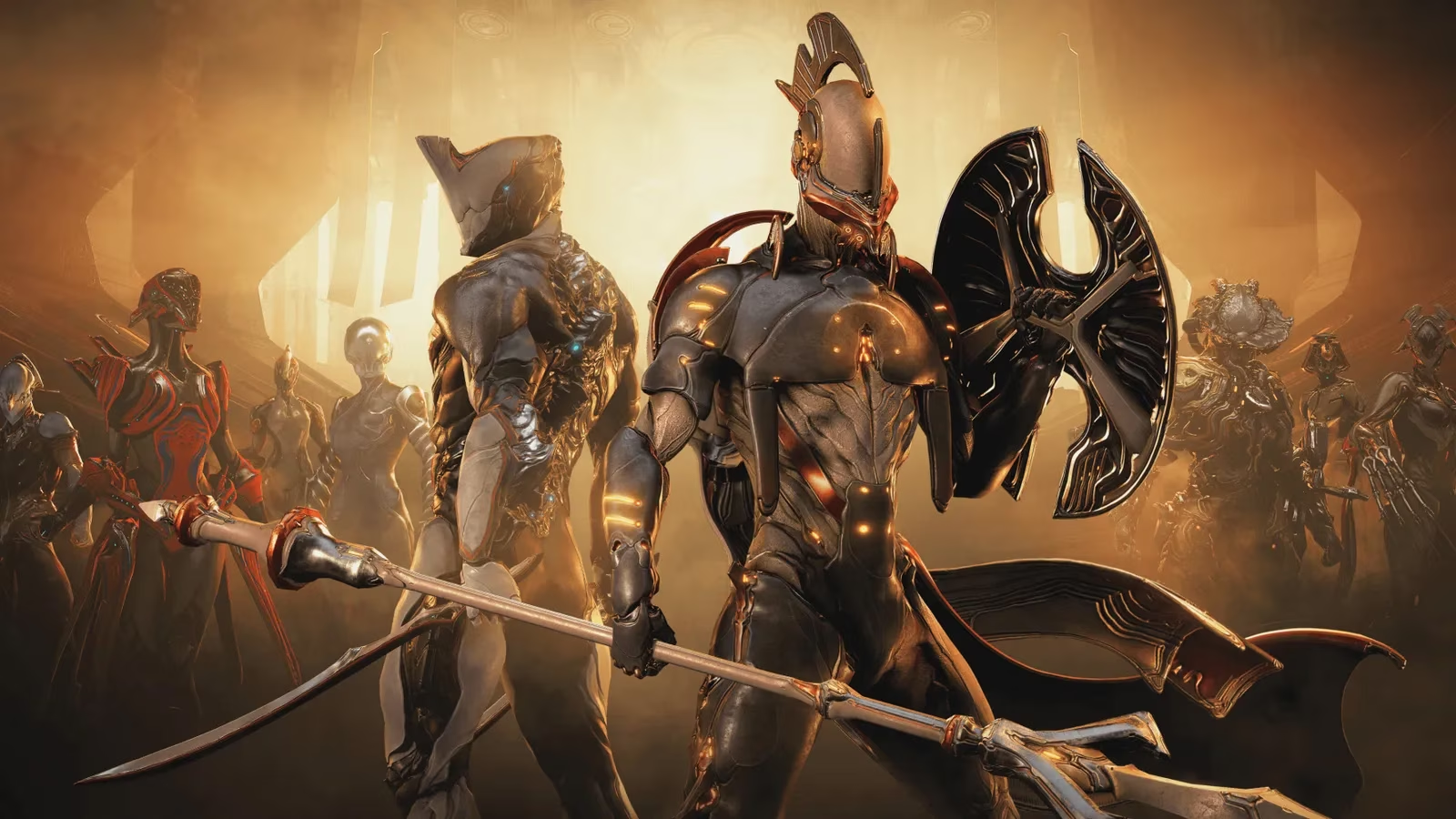
My first major choice was selecting my Warframe, the armored suit that would define my early days. The game presented me with three archetypes, each a key to a different playstyle. Excalibur, the swordsman, promised straightforward melee dominance. Mag, the space mage, offered control over magnetism and crushing force. Volt, the speedster, specialized in lightning-fast movement and crowd control. The community wisdom was clear: if in doubt, choose Excalibur. He was the reliable workhorse, easy to learn and capable of scaling into the game's later challenges like a well-forged blade that never loses its edge. Still, the game assured me all paths eventually converge, and the other frames could be earned later. I glanced at the previews, their digital forms shimmering with potential.
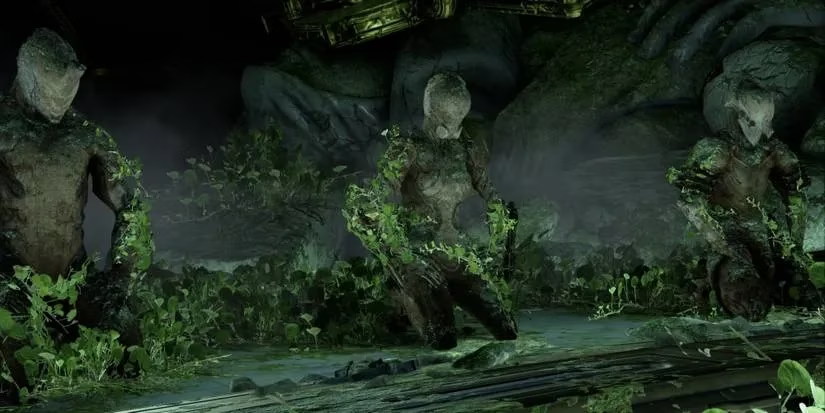
To help my decision, I broke down their pros and cons:
| Warframe | Pros | Cons |
|---|---|---|
| Excalibur | Easy to play, Great damage, Energy efficient | Upgraded version given later, Guns don't synergize, Weak passive |
| Mag | Excellent damage, Loots from afar, Endgame utility | Complex abilities, Needs energy regen, Squishy early on |
| Volt | Versatile, Incredibly fast, Buffs allies & stuns foes | Electricity often resisted, Short ability duration, Limited survivability |
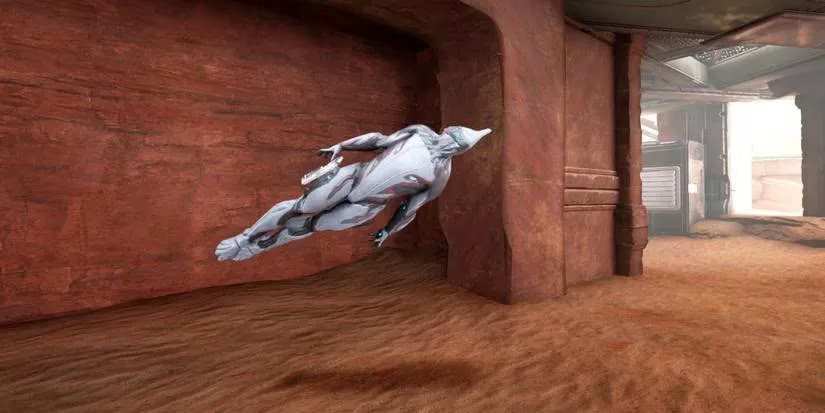
With Excalibur chosen, I was thrust into the Origin System. I quickly learned that Warframe defies the slow, cover-based norms of other shooters. Survival here is a ballet of perpetual motion. The cornerstone of this dance is the bullet jump. Crouching and jumping launches you forward in a corkscrew motion, a maneuver that makes sprinting feel like wading through syrup. Chaining it with slides, rolls, and double jumps turned traversal into a thrilling race. The aim glide became my tactical pause button, slowing my descent mid-air to line up perfect shots. My toolkit also included three weapon slots: Primary, Secondary, and Melee. Swapping was instantaneous, and melee combat had its own rhythm, building a combo multiplier that fed into devastating Heavy Attacks.
Powers required Energy, primarily from glowing blue orbs dropped by enemies and crates. For a newbie like me, breaking every crate in sight became a habit, a hopeful search for that vital resource. The mods Streamline and Fleeting Expertise were whispered as early essentials to reduce ability costs.
After the initial quests, the sheer openness was overwhelming. The Star Chart sprawled before me, a constellation of nodes and planets. My guiding light became the Junctions, space stations acting as gateways between planets. Completing their challenges and defeating the guardian Specter within was my primary directive. They taught me mechanics and rewarded crucial quests. The path was clear: unlock the entire Star Chart. Key junctions, like the one from Uranus to Neptune, promised access to legendary quests that would redefine my understanding of the game.
My true power, I discovered, didn't come from my frame or weapons alone, but from Mods. These collectible cards were the engine of progression. I started hunting for essentials:
-
Streamline for my Warframe, farmed from low-level bounties on Earth.
-
Elemental Damage mods for my weapons, earned from junctions and fallen foes.
-
Mobilize to enhance my parkour, dropped by Grineer on Earth.
-
Energy Siphon, purchased with Nightwave Creds.
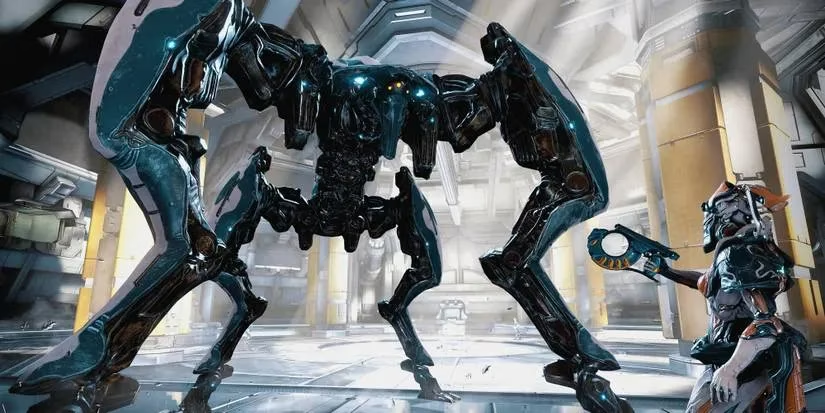
The first major test of my skills was a boss fight. I headed to Fossa on Venus to face The Jackal. This mechanical beast taught me parkour under fire and introduced Parazon finishers. More importantly, it dropped components for Rhino, a tanky Warframe renowned for carrying new players. Farming him became my first tangible goal.
Simultaneously, I engaged with Nightwave, Warframe's evergreen and completely free battle pass. Weekly challenges granted XP, unlocking ranks filled with vital rewards: weapon slots, Forma, and Nightwave Creds. With those creds, I was advised to prioritize:
-
Orokin Reactors/Catalysts: To double the mod capacity of my Warframe and weapons.
-
Aura Mods: Like Steel Charge or Energy Siphon, which actually grant mod capacity and team-wide benefits.
The list of "should-dos" grew, each a thread in the larger tapestry:
-
Craft the Taxon Sentinel for loot collection and shield support.
-
Join a Clan to access dozens of blueprints for weapons and Warframes like Zephyr and Nezha.
-
Increase my Mastery Rank by leveling every piece of gear to 30.
-
Pledge to a Syndicate at MR3 (Steel Meridian was a popular choice) for reputation rewards.
-
Hunt for Corrupted Mods on Deimos using Dragon Keys.
With goals set, I needed to upgrade my arsenal. Weapons are primarily crafted from blueprints bought in the market. My shopping list took shape:
| Weapon | Type | Mastery Rank | Why It's Good |
|---|---|---|---|
| Hek | Shotgun | MR4 | Cataclysmic damage, great with a Syndicate augment |
| Xoris | Glaive | MR4 | Best beginner melee, from The Deadlock Protocol quest |
| Atomos | Secondary | MR5 | Chains beams between enemies, excellent crowd-clear |
| Vectis | Sniper | MR2 | High damage, rewarding precision |
Then came the heart of it all: Modding. This system was the difference between scratching an enemy and evaporating them. Opening the mod screen, I had to balance:
-
Mod Capacity, increased by leveling, Orokin Catalysts/Reactors, or Forma.
-
Polarities, symbols that halve the cost of matching mods.
-
Stats, which changed in real-time as I slotted cards.
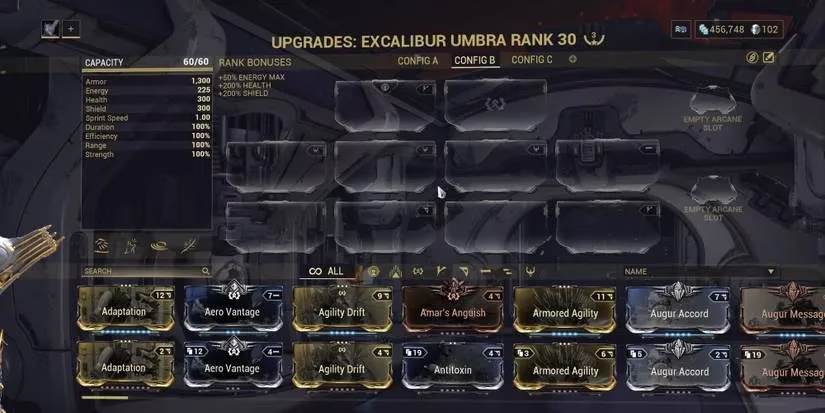
For my Warframe, builds focused on survivability (mods like Vitality) and enhancing four key ability stats: Strength, Duration, Range, and Efficiency. For weapons, the recipe was more universal: boost base damage and multishot, then combine two elemental mods to create a new damage type like Viral (which makes enemies take more damage). Critical chance or status effect upgrades came next, depending on the weapon's innate strengths.
Ultimately, I learned that Warframe is a game about setting your own goals. The galaxy offers endless avenues:
-
Railjack for starship combat.
-
Steel Path for a brutal, rewarding replay of the Star Chart.
-
Syndicate Grinds in open worlds.
-
The eternal pursuit of fashion (FashionFrame).
-
Trading to earn Platinum.
Trying to do everything at once was a recipe for burnout, like trying to drink from a firehose. I had to choose my own adventure. Thankfully, I was not alone. The Tenno community had built incredible resources:
-
The Warframe Wiki, my digital encyclopedia.
-
Overframe.gg for build ideas.
-
Warframe.market for streamlined trading.
My journey from a confused initiate to a confident Tenno was just beginning. The cosmos of Warframe, vast as a neural network of forgotten dreams, was now a playground of possibilities, waiting for me to carve my own path through the stars.
Comments