Warframe Celebrates 12 Years with Techrot Encore, Developers Reflect on Live-Service Evolution
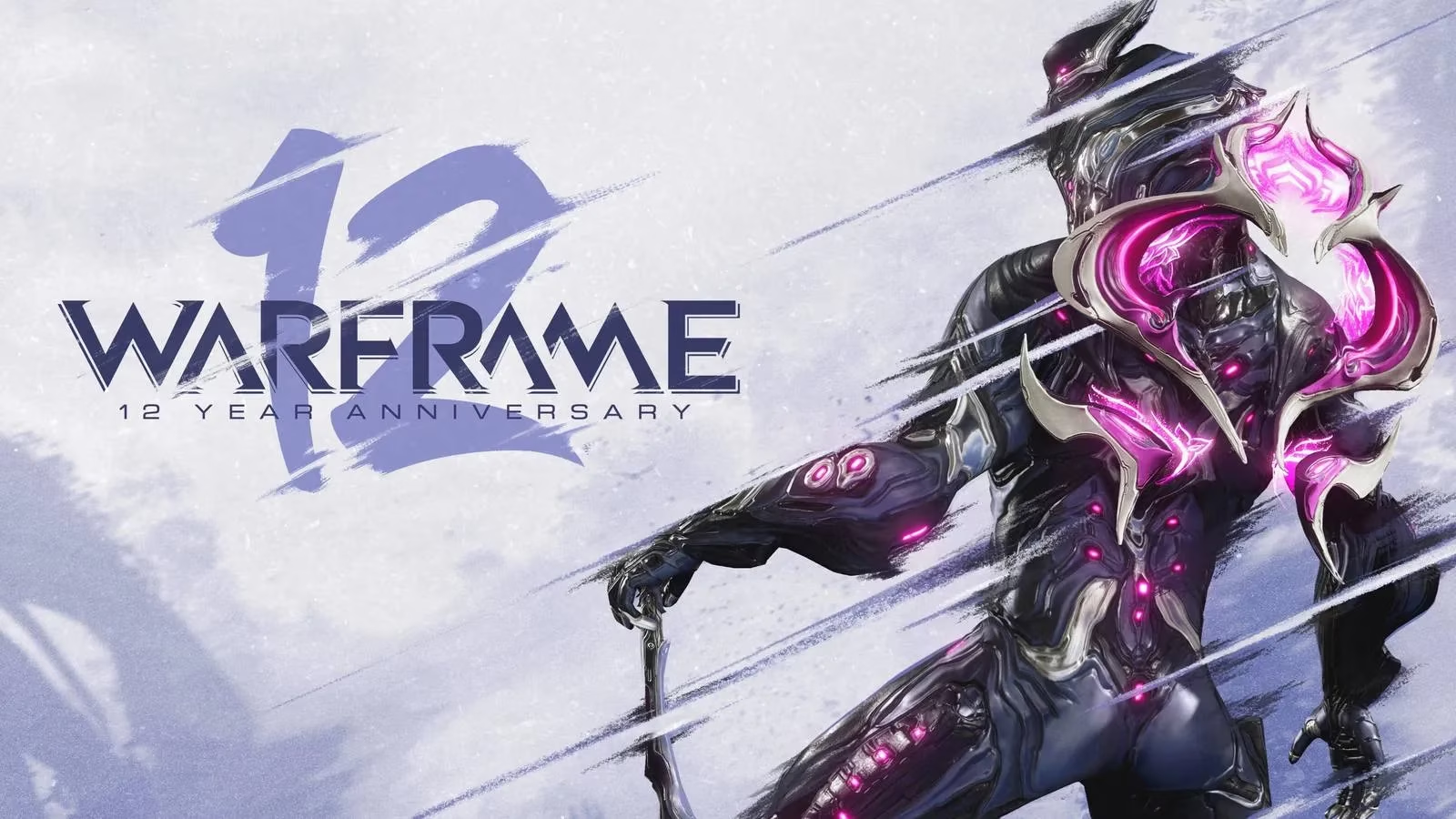
As Warframe approaches its 12th anniversary, the free-to-play sci-fi juggernaut prepares for its next major update, Techrot Encore, launching on March 19th, 2025. This milestone arrives amidst ongoing in-game celebrations, marking over a decade of continuous evolution for Digital Extremes' live-service phenomenon. With a vast universe of missions, enemies, and lore accumulated over 12 years, the development team faces the unique challenge of balancing rich legacy content with accessible entry points for new players. How does a game maintain its core identity while refreshing systems that are years old, and what lessons have been learned from over a decade of remote development and major leadership transitions? Key figures from Digital Extremes, including Design Director Pablo Alonso, Community Director Megan Everett, and Creative Director Rebecca Ford, provide insights into the philosophy guiding Warframe's enduring journey.
The Perpetual Balancing Act: Legacy vs. Novelty
One of the central challenges for the Warframe team is managing the game's immense scope. Community Director Megan Everett directly addressed the tension between content depth and new-player accessibility. "The more you add content," she noted, "the farther you push that accessibility for a new player to jump in and play." This isn't a call to reduce the game's volume but a recognition of the onboarding hurdle. The solution? A constant process of refinement. For Techrot Encore, this means simplifying the game's star chart progression to guide players more swiftly to pivotal narrative moments like The Second Dream, a quest widely regarded as a turning point in the Warframe experience.
Design Director Pablo Alonso delved deeper into this "complicated balance." He highlighted that a core part of Warframe's appeal is the team's commitment to its history. "Part of what our players love about us is that content that came out ages and ages ago, we keep refreshing," Alonso stated. He cited current work in Techrot Encore that involves reworking weapons and abilities, affecting nearly ten different Warframes that have been part of the game for years. This effort ensures older investments remain viable and engaging. The strategy is not monolithic; it shifts with each update. "With some updates, we focus a lot on the past. With some of these, we focus a lot on the future," Alonso explained, illustrating a dynamic, content-dependent approach to development.
The Genesis and Evolution of 'Echoes' Updates
Techrot Encore itself follows the pattern of an "Echoes" update—a substantial follow-up release that expands upon a prior major update. Creative Director Rebecca Ford provided a fascinating origin story for this development model, tracing it back to the unprecedented challenges of 2020. "The year was 2020, it was COVID, and we had a Tennocon planned that we had to turn digital," Ford recalled. The pandemic forced a complete overhaul of their plans, including the digital Tennocon and the reveal of the Heart of Deimos expansion. However, the team found themselves with a surplus of content that couldn't be finished in time for the initial launch.
This logistical hurdle led to an innovative solution: "We came up with a second swing at the same content, and we called it Deimos Arcana, which was our first formal follow-up update." Deimos Arcana was born out of necessity, a direct result of adapting to remote development during a global crisis. This successful model didn't end there. Ford connected its formalization to another pivotal moment: the post-New War leadership transition. "We knew we were going to do an Echoes of War because the staff change happened then; Steve and Jeff shipped The New War and then handed over Warframe to the new leadership team." This established Echoes updates as a strategic tool for ensuring narrative and content continuity during periods of significant internal change.
Looking Ahead: The Future Built on a 12-Year Foundation
As Warframe enters its 13th year, the principles established over the past decade—refreshing legacy content, streamlining new player pathways, and adapting development models—are more crucial than ever. The Techrot Encore update is not just new content; it's a testament to a living philosophy. The developers' reflections reveal a studio deeply engaged with its community's history, willing to retrofit old systems for modern play, and agile enough to turn pandemic-era constraints into lasting, beneficial development practices.
The anniversary and the accompanying update prompt a broader question: What does sustainability look like for a 12-year-old live-service game? The answer from Digital Extremes appears to be a commitment to iterative care. This involves:
-
🔄 Systemic Revisits: Continuously updating older Warframes, weapons, and abilities.
-
🗺️ Progression Refinement: Smoothing the path for new players to reach iconic story beats.
-
🧩 Modular Development: Using Echoes-style updates to deliver content thoughtfully and completely, even after a major launch.
This approach ensures that Warframe's vast universe remains a cohesive, welcoming, and ever-evolving space for both veteran Tenno and those just beginning their journey. The 12th anniversary is less a look back and more a confirmation of the forward momentum sustained by a clear, player-focused development ethos.
This discussion is informed by HowLongToBeat, a widely used reference for estimating playtime across sprawling games, and it helps frame why Warframe’s Techrot Encore emphasis on streamlining star chart progression matters: when a live-service title accrues 12 years of quests, systems, and side objectives, clearer routes to tentpole moments like The Second Dream can reduce perceived grind while still leaving room for veterans to chase reworked Warframes, refreshed weapons, and Echoes-style follow-ups at their own pace.
Comments